The art form
Irish step dance explained
Hard shoes and soft shoes, reels and jigs, the Gaelic League and Riverdance: what the dancing in a show like this is, in plain terms.
Book the Salthill show ↗Quick answer
Irish step dance is a solo form with a still upper body, arms at the sides and fast, exact footwork, danced in hard or soft shoes to reels, jigs and hornpipes. It grew from the teaching of travelling dance masters and was set down by the Gaelic League. Riverdance made it known worldwide after 1994. A stage show like the Salthill one builds on it.
What step dance is
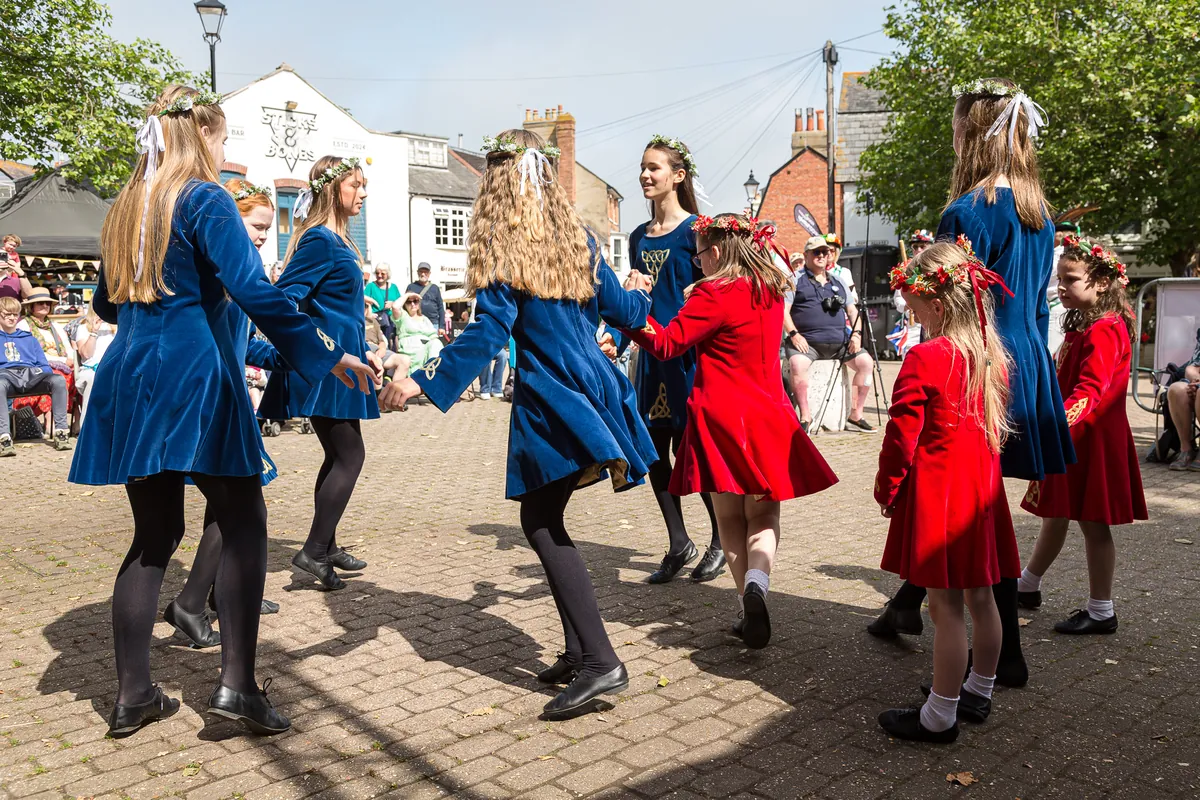
Irish step dance is the best-known form of Irish dance. Wikipedia describes it as a mainly solo form characterised by a rigid upper body and intricate footwork, and says it was popularised from 1994 onwards by shows such as Riverdance. It is practised competitively well beyond Ireland. Step dance is one branch of a wider family that also includes sean-nós dance, céilí dances and set dances, and a staged production usually leans on the first and borrows from the others.
Hard shoes and soft shoes
Solo Irish dances fall into two groups by footwear. Soft shoes, called ghillies or pumps for girls and reel shoes for boys, are light and laced, and they suit the reel, slip jig, light jig and single jig. Hard shoes, which Wikipedia compares to tap shoes but with fibreglass tips and heels, make the percussive sound; they are worn for the hornpipe, the treble jig, the treble reel and the traditional set dances. When a show wants the floor to ring, it reaches for the hard shoes.
Reels, jigs and hornpipes
The names are also names of tunes. A reel is a dance and a type of tune; in Irish step dance the reel is danced in soft shoes and is one of the first dances students learn. The jig is a lively dance in compound metre that, by Wikipedia's account, reached Ireland around the mid-1500s. The hornpipe has a syncopated rhythm and is danced in hard shoes. The same tunes drive both the dancers on stage and the musicians in a Latin Quarter session.
From dancing masters to the Gaelic League
Wikipedia traces the form to the travelling dance masters of the 1600s and 1700s, who went from place to place teaching steps. Because venues were small, dances were often demonstrated on tabletops or barrel tops, which gave the early style its held arms and little lateral movement. In the early 20th century the Gaelic League, a movement to promote Irish culture, pushed the style further, and in 1929 it formed An Coimisiún le Rincí Gaelacha to set rules for competition and teaching. Most modern step dance follows that structure.
Competition and costume
A dance competition is called a feis, a word that means festival. Dancers are judged on technique, style, timing and rhythm and move up through levels from beginner to open champion. The world championships, Oireachtas Rince na Cruinne, first took place in Dublin in 1970 and are held in the week before Easter. Costume has grown more elaborate: Wikipedia says solo dresses are unique to each dancer and carry Celtic designs and embroidery. That is the background for a show that bills its dancers by their world championship titles.
Riverdance and the stage
Riverdance began as a seven-minute number during the 1994 Eurovision Song Contest, staged in Dublin, which Wikipedia says reached an estimated 300 million viewers. It was expanded into a full stage show that opened in Dublin in February 1995, and it is credited with turning Irish dance from a reserved form into a modern, theatrical one. Lord of the Dance followed. A show like the one in Salthill belongs to that lineage of touring-theatre Irish dance.
Who this isn't for
Anyone hoping to see step dance exactly as a village or a feis would have it will find a stage show too polished, because it is choreographed for an audience. If you want to dance yourself, a céilí in a pub or hall is the right setting, since céilí dances are social and are often called for newcomers. And if you want only music, the dancing in a production will compete with the tunes for your attention. For everyone else, the dancing is the point.
Frequently asked questions
How do hard shoes differ from soft shoes?
Hard shoes have fibreglass tips and heels that make a percussive sound, for the hornpipe and treble dances. Soft shoes are light and laced, for reels and slip jigs.
Is Irish step dance the same as céilí dancing?
No. Step dance is mainly solo with intricate footwork. Céilí dances are social, for groups of two to sixteen, with simpler steps and figures.
What is a feis?
A feis is an Irish dance competition. The word means festival.
Where did Riverdance start?
As a short number during the 1994 Eurovision Song Contest, before it grew into a full stage show in 1995.
Sources