The music
Fiddle, pipes and bodhrán
The instruments and the old-style singing behind Irish traditional music: what each one sounds like and what they do together.
Book the Salthill show ↗Quick answer
Irish traditional music leans on fiddle, whistle, flute and pipes, with accordion, concertina and a goatskin drum alongside, and on a solo singing style called sean-nós that needs no accompaniment. Melody is played in unison and kept simple in harmony. A show or a session in Galway draws on all of it, and the programme can change from season to season.
The core instruments
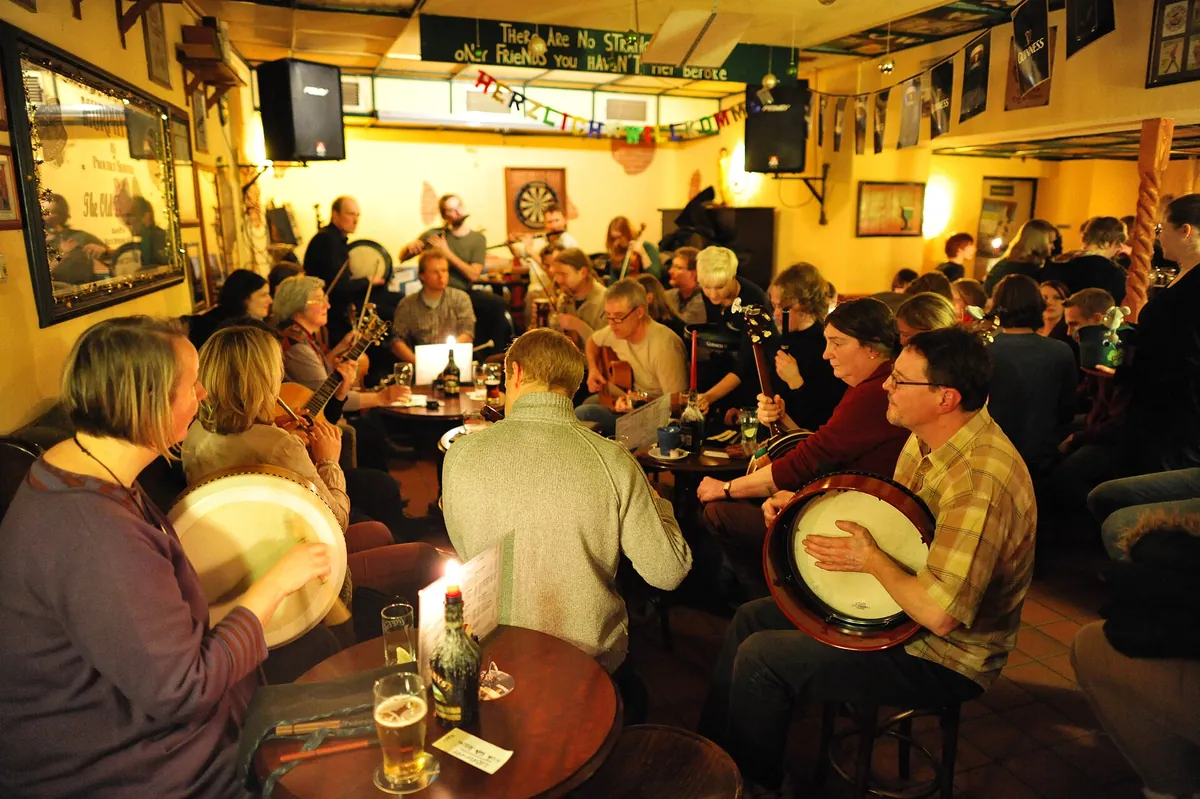
Wikipedia lists fiddle, tin whistle, flute and uilleann pipes as the backbone of Irish traditional dance music, joined late in the 19th century by the button accordion and the concertina. The fiddle is a violin played in a fiddle style that varies widely by region. Because melody matters most in this music, the instruments play the tune in unison and harmony is typically kept simple or absent.
The uilleann pipes
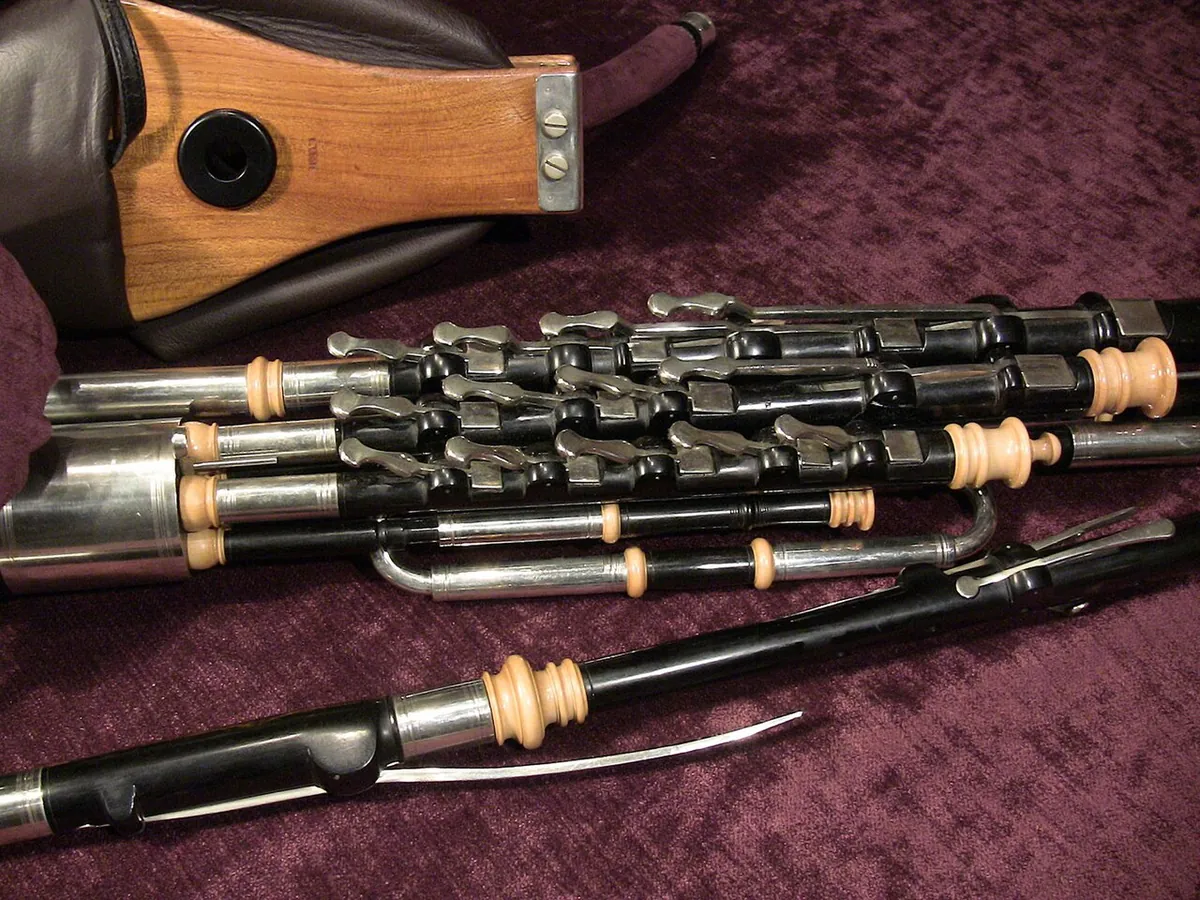
Wikipedia calls the uilleann pipes Ireland's characteristic national bagpipe. The name comes from píobaí uilleann, pipes of the elbow: the player pumps a bellows with the arm to fill the bag, so no breath is needed. The chanter has a range of two full octaves, and regulators, keyed pipes worked by the wrist, give simple chords. Wikipedia notes that some pipers can talk or sing while they play, which the bellows make possible.
The bodhrán
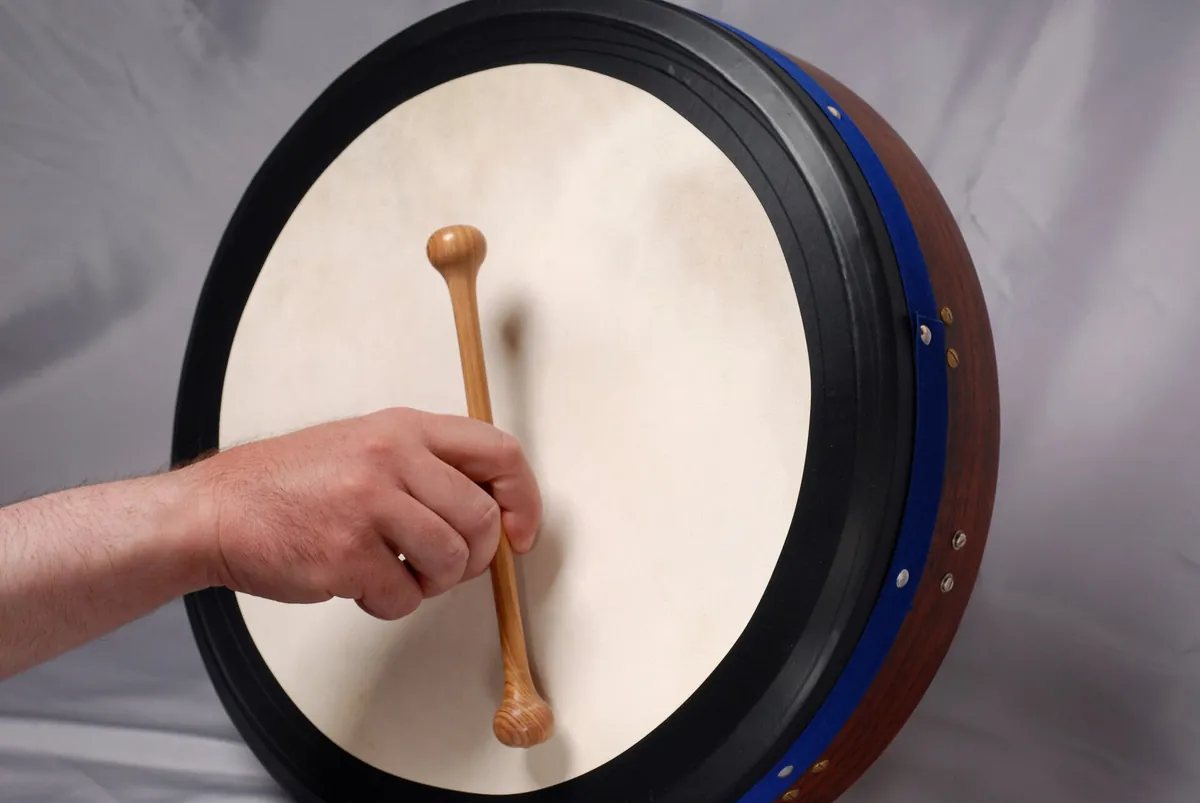
The bodhrán is a frame drum, usually 35 to 45 centimetres across, with a goatskin head tacked to one side and the other side open so a hand can press against the skin to change the pitch. Wikipedia lists the bands and players that have made it famous and says its origins are debated, including a theory that it comes from a farm riddle used to sift grain. In a session or a show, it keeps the pulse under the tunes.
Fiddle, flute and whistle
In Wikipedia's account the fiddle is nearly always a violin played in a fiddle manner, and regional styles differ so widely that two players on the same tune can sound quite unlike. The low whistle, a derivative of the common tin whistle, is also popular, although some musicians find it less agile for session playing than the flute or the ordinary D whistle. The concertina and the button accordion arrived in the late 19th century and now sit comfortably beside the older instruments.
Sean-nós singing
Sean-nós means in the old way. It is unaccompanied traditional Irish singing, usually in the Irish language, with very long, highly ornamented melodic lines. Wikipedia quotes the musician and academic Tomás Ó Canainn saying no aspect of Irish music can be fully understood without it, and says its origins are unknown but probably at least seven centuries old. A vocalist in a show may sing an Irish ballad in English, or a sean-nós song in Irish; nothing here promises either on a given night. Wikipedia adds that sean-nós songs run from love songs to laments and lullabies, and that the tradition stayed oral, with only a few songs written down as early as the 16th century.
How it fits a show
A stage production arranges these elements for an audience. Dancers need a fixed tempo, so the music in a show is rehearsed to the step. A pub session is the opposite: players follow each other and the mood of the room. If you want to hear how the same reel changes from stage to table, book the show for one evening and walk into a Latin Quarter pub on another. Galway Tourism lists daily sessions there, so you will not have far to look.
Who this isn't for
Loud, amplified folk-rock is not on offer. If you want a quiet recital with no dancing, a church or concert hall is better. If you dislike traditional music altogether, nothing in a Galway pub or on the Salthill stage will change your mind in a single evening, so spend the night on something else, such as the seafront or a city walk.
Frequently asked questions
What are the uilleann pipes?
Ireland's national bagpipe. The bag is filled by a bellows worked with the elbow, which is what the name means.
What is a bodhrán?
A goatskin frame drum played with a short stick, used to keep the pulse in Irish music.
What does sean-nós mean?
In the old way. It is unaccompanied traditional singing, usually in Irish, with long, ornamented lines.
Will the show play every instrument?
Programmes change from season to season, so no instrument or song is promised on a given night.
Sources